A Weekend Ride to Vũng Tàu, and Eight Walls I Came Home With
A weekend bicycle ride to Vũng Tàu, the road that made it worth doing, and eight photographs of walls. Notes on riding for the pleasure of it, and on why a town you arrive in slowly gives you different pictures.
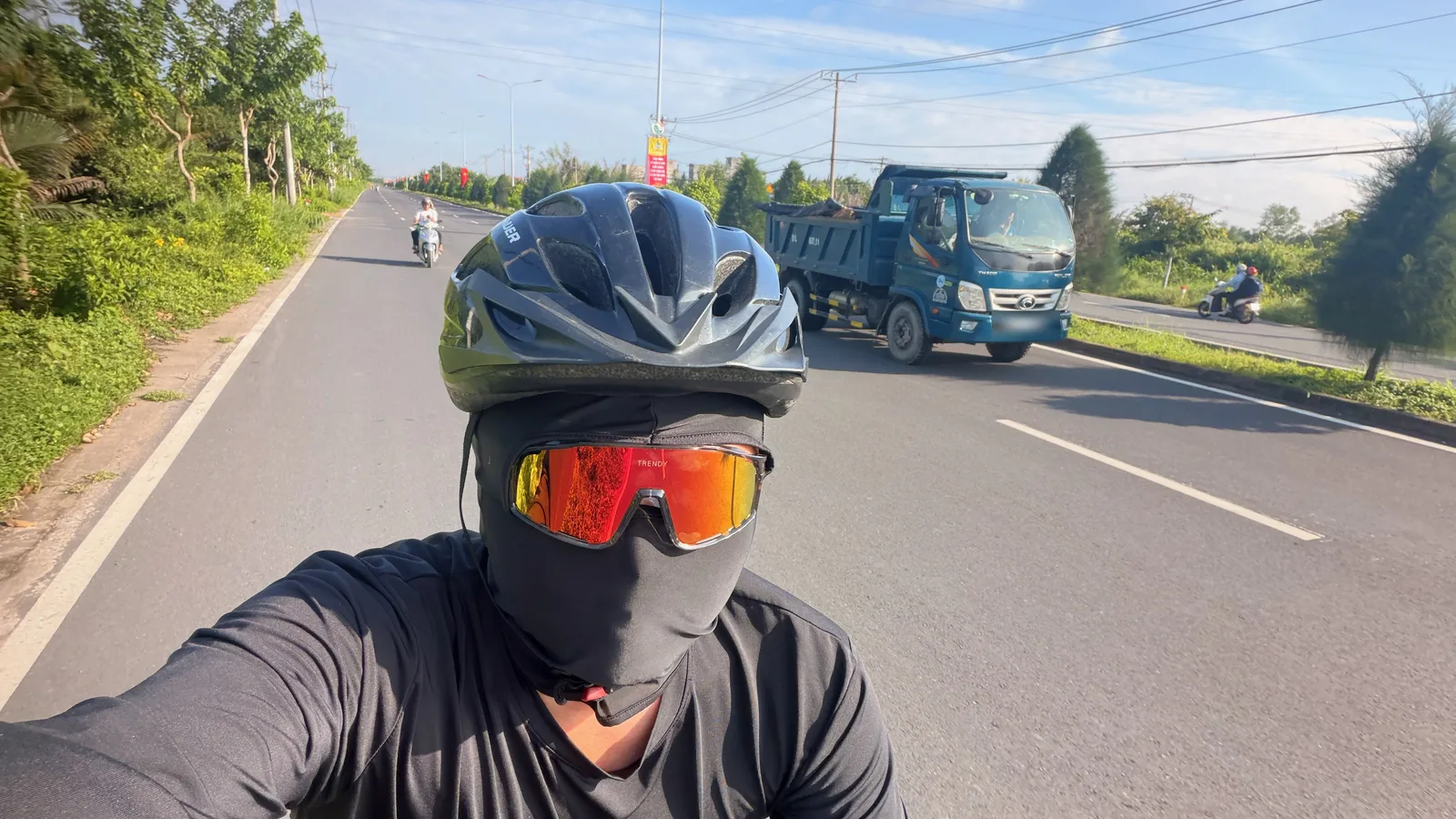
I rode to Vũng Tàu last weekend, for no better reason than that it is a good way to spend two days. A road, a bicycle, a small camera in a jersey pocket. Nothing to prove and nowhere to be by any particular hour.
This is about both halves of that: the riding, which was the point, and the eight photographs I came home with, which were the souvenir.
The road is the better half
Scenes from the ride: an empty highway before sunrise, a green tunnel of roadside trees, and a bridge crossing in flat morning light.
The ride starts with a boat. You queue at Bình Khánh in the half dark with the motorbikes, roll on when the ramp comes down, and for a few minutes you are not riding at all: just standing on a steel deck with the bike against your hip, letting somebody else do the work.
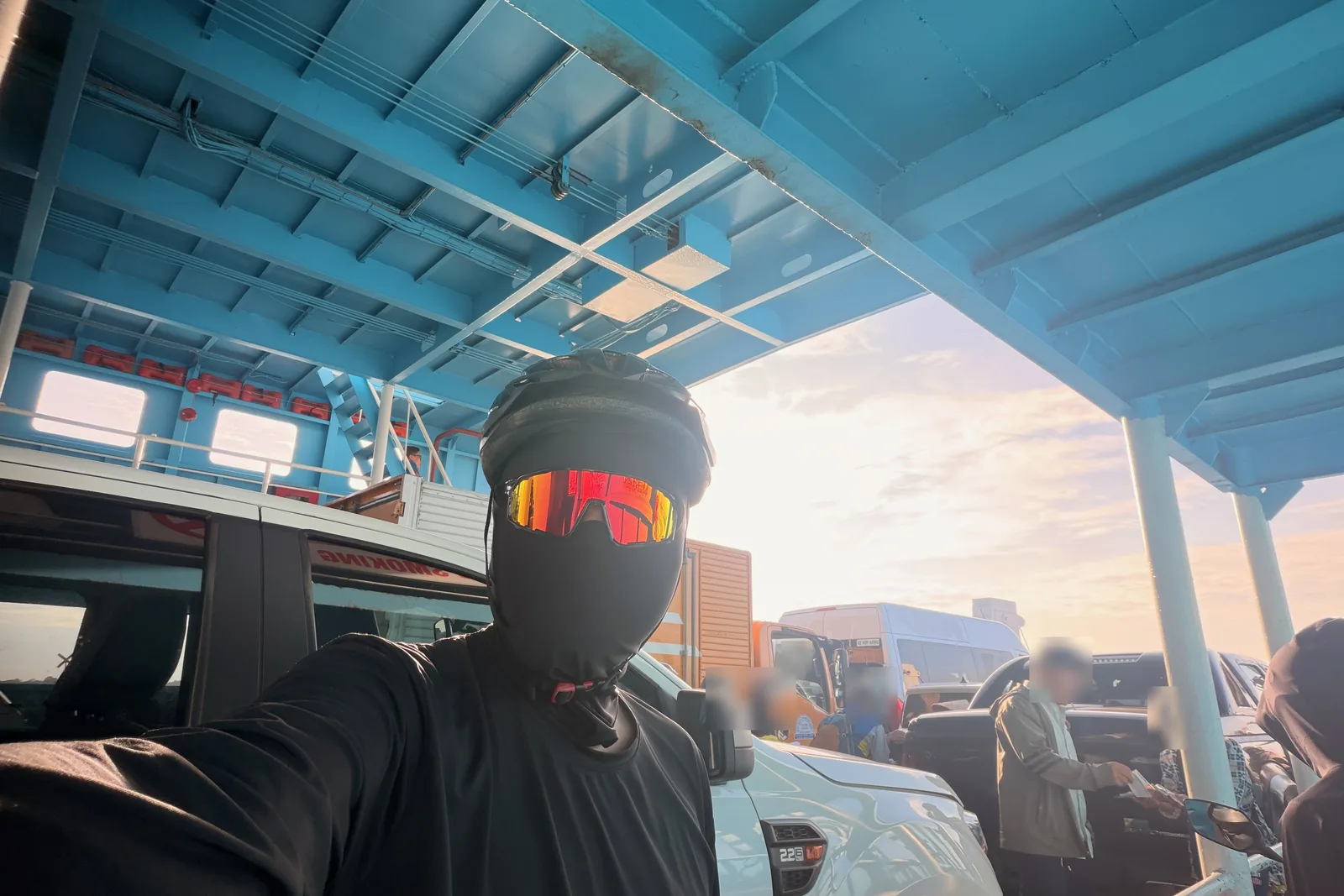
The Bình Khánh crossing, a few minutes after six.
Then the hours before the sun is properly up, which are the ones worth setting an alarm for. Empty highway, air that has not turned yet, light so low across the asphalt that every patch in the road throws its own small shadow.
After that, mangrove. Rừng Sác road is the only road there is on this side, and most of it runs through the Cần Giờ forest that UNESCO named Vietnam’s first world biosphere reserve back in 2000: grey tangled roots right up to the shoulder, mile after mile, salt and mud. Then with no warning it opens into a brand new boulevard, four lanes wide and completely empty, yellow-flowering shrubs the whole length of the median, built for a town that has not turned up yet. You ride down the middle of it feeling like you are getting away with something.
I enjoy this more than I enjoy arriving. Arriving is just where the riding stops.
A bicycle is a good camera bag
By the time I got into town I had been staring at the sky for hours, which turns out to be excellent preparation for looking at buildings.
A bicycle puts you on whatever street the road gives you, moves slowly enough to read a facade going past, and stops instantly, anywhere. You also arrive pleasantly wrecked, in that state where you stop registering what things are for and start noticing what they look like. A wall stops being the side of somebody’s hotel and turns into a red column between a white plane and a teal screen.
Mostly leaving things out
I spent the afternoon standing a long way back and cropping in tight. Every picture below is the same move.
It is an editing habit more than a technical one: getting closer includes, staying back excludes. From across a street you can pull out a rectangle with four or five things in it and nothing else - no doorway, no signage, no parked motorbikes, none of the small visual admin that makes a building look like a building. What is left is planes, edges, colour and light.
Distance flattens. Two facades a hundred metres apart press into one surface, and several of these frames are separate buildings pretending to be a single wall.
Sky is the cheapest empty space there is. Point up, and everything that would have explained the picture drops out of the bottom of the frame.
Light is a schedule, not a decision. All of it was made in the last stretch of usable sun, when a low raking beam separates one plane from the next. The same walls at midday are one flat tone and worth nothing. I was waiting, not solving.
Eight walls
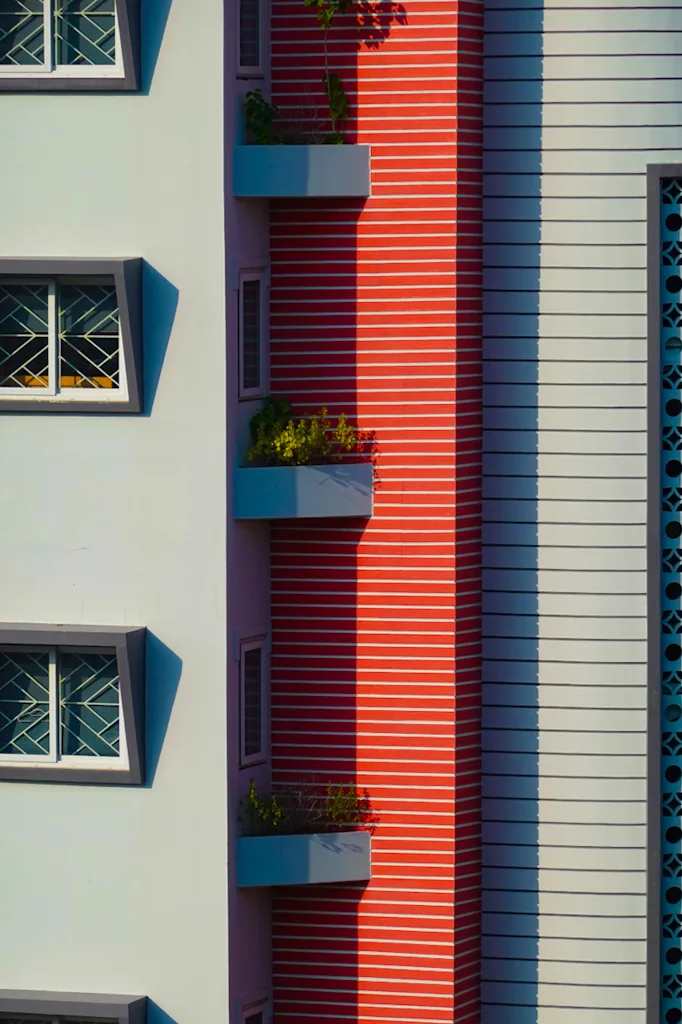
Three planes at three different distances, and from where I was standing you cannot tell which one is nearest. That ambiguity is the picture.
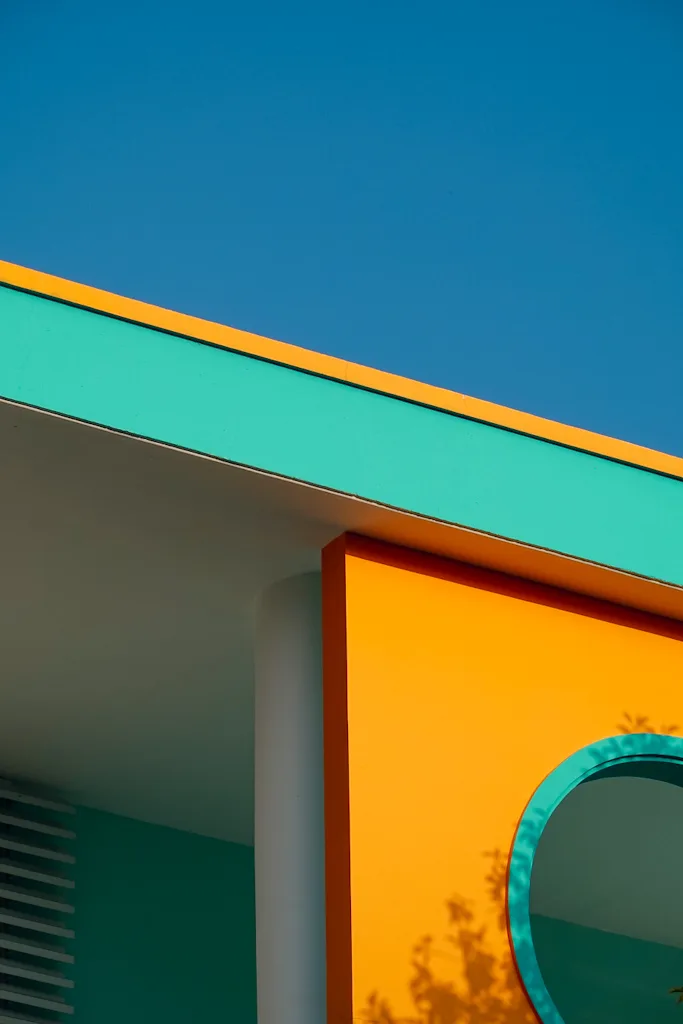
Almost entirely subtraction. Stand back far enough, crop in tight enough, and the entrance, the signage and the street fall outside the edges on their own.
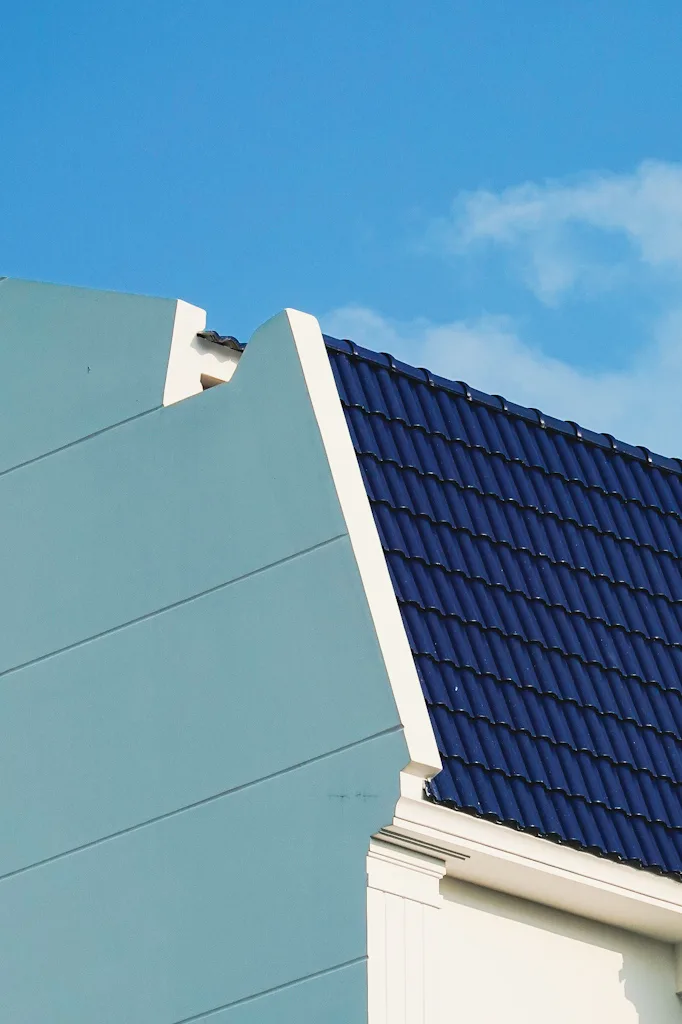
Aiming up is the fastest way to buy a clean background. Nothing in this frame tells you what the building is or who is inside it.
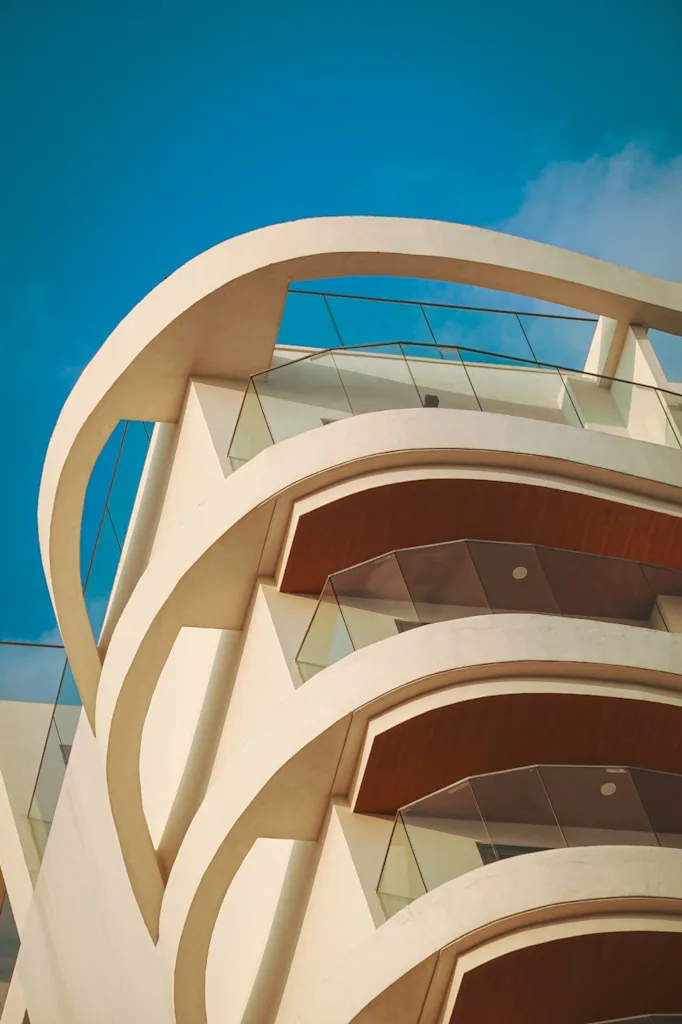
Late sun is doing all the separating here. Earlier in the day these arcs collapse into one undifferentiated white and there is no photograph to take.
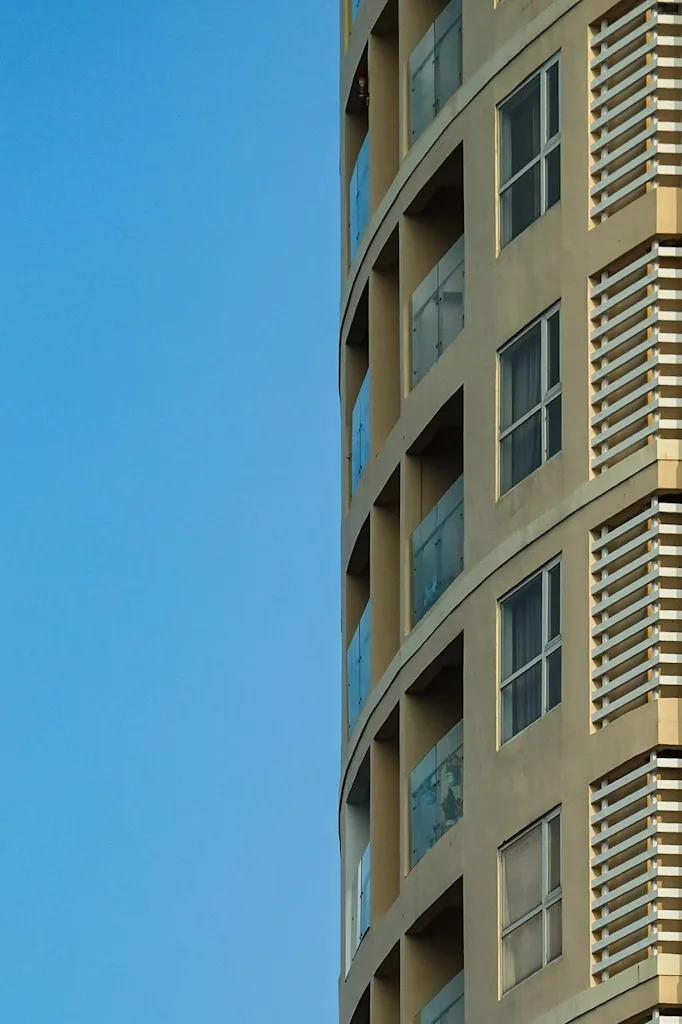
Half sky, deliberately. Repetition only becomes rhythm once nothing else in the frame is competing to be counted.
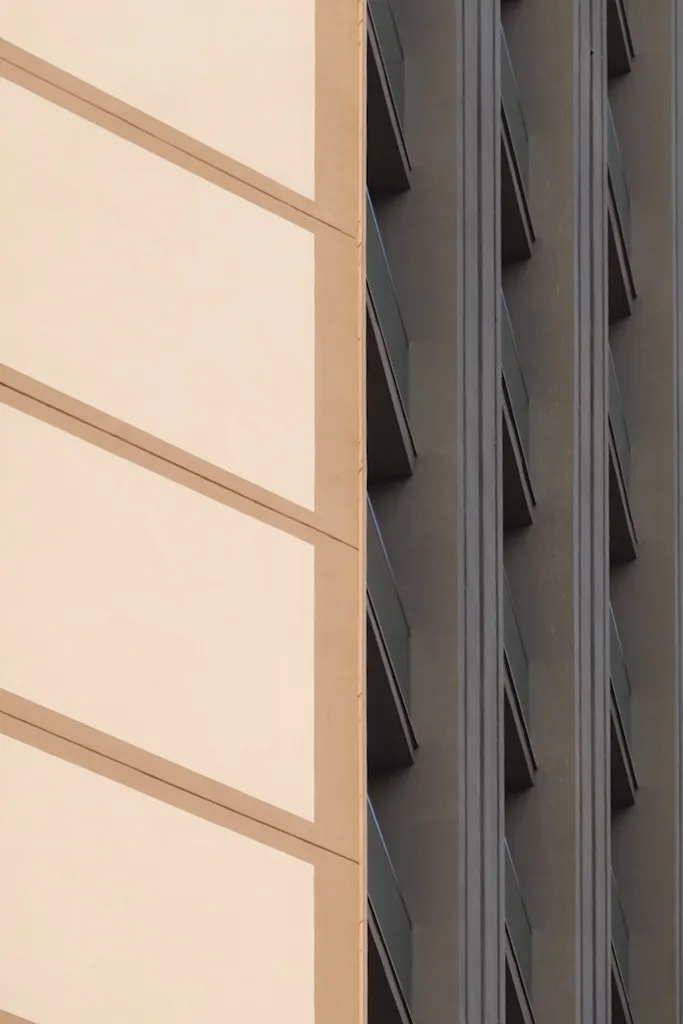
The subject is the edge, not either wall. That line shifts every few minutes, and not long afterwards it was gone.
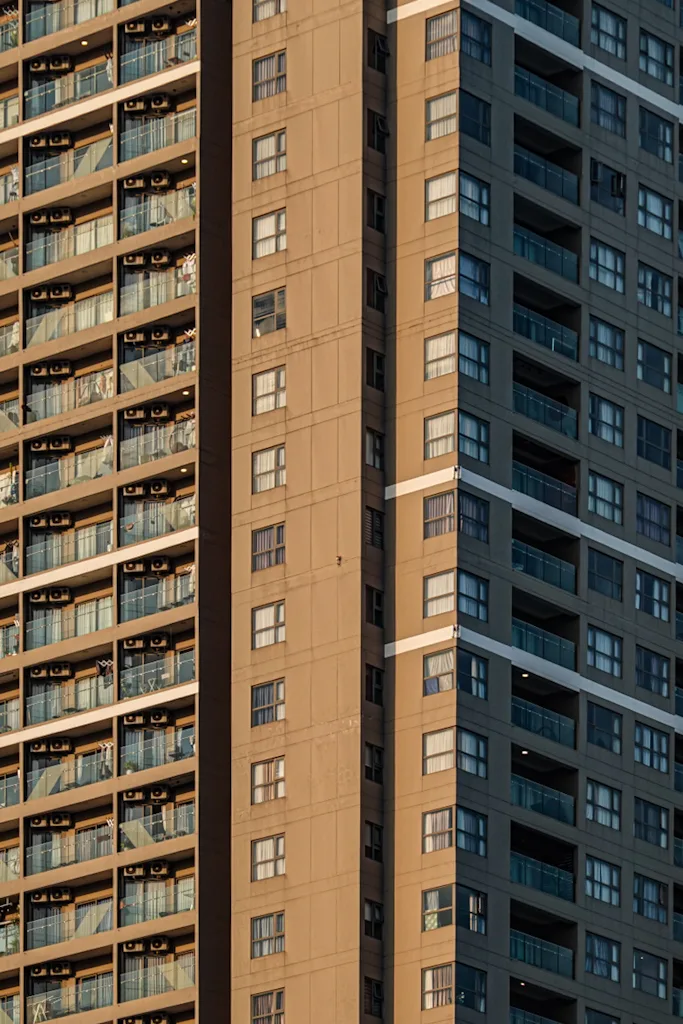
Three towers, well apart on the ground, pressed by distance into one continuous face. This is the one I rode home pleased about.
The one that needed the whole thing in frame
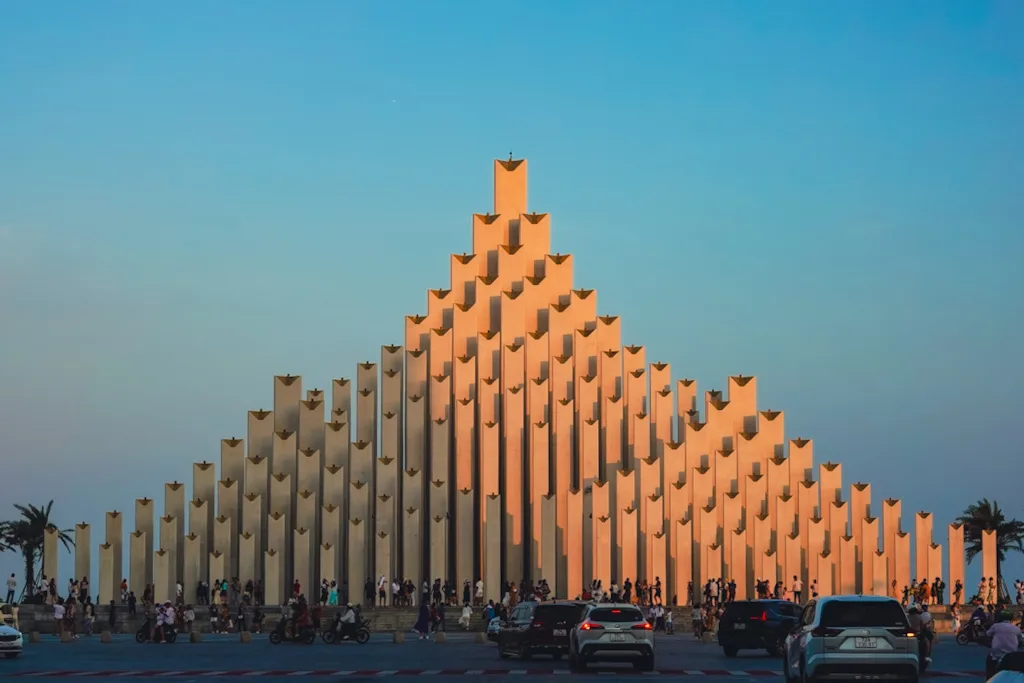
Tháp Tam Thắng, on Thùy Vân by Bãi Sau, and the only time all afternoon I pulled back wide - here the whole object was the subject rather than a detail of it.
It is named for the three old villages that became this city: Thắng Nhất, Thắng Nhì and Thắng Tam. It is a field of triangular concrete pillars set out on three triangular bases, rising from about eleven metres at the low end to over thirty at the tall one and stepping up toward the water, so that from the right angle the array reads as sails filling with wind on the way out to sea. Sun Group funded it and it opened around September of last year.
Every other person in front of it had a phone up. I was standing further back with a camera, which is the same instinct with a few more steps in it.
Worth the ride
The photographs are good, but they are not why I went.
Sometimes the whole point is to be somewhere else for a day and breathe a different air. Salt instead of traffic. A road that is not taking you anywhere you are required to be. A ferry deck full of motorbikes at dawn, everybody quiet, nobody in a hurry yet.
You come home to exactly the problems you left and not one of them has moved. But you have been away, and the last hour of light on somebody’s balconies is still sitting in your head, and that turns out to be enough to be going on with.
The camera just came along and got lucky.